Descriptions in the source
- Body exhausted, but the mind switches on right at lights-out.
- Waking around 3am with a busy head that won't quiet down.
Traditional background
A traditional framework, not a biomedical diagnosis.
The tradition calls this "heart and kidney not meeting", a plain-language way of saying the part of you that should be settling down at night (the cooling, anchoring reserves) and the part that's still firing (the mind, restless energy) aren't syncing up. Your body is spent. Your mind hasn't gotten the memo.
The source uses heart-and-kidney language for one traditional description of tired-but-wired sleep difficulty. It is not a diagnosis, efficacy claim or instruction to add heat.
When warmth should wait
Sleep difficulty with breathing problems, severe mood symptoms, or persistent or worsening features needs appropriate clinical assessment. The source also cautions about heat presentations, pregnancy-related limits, smoke, skin and attention; this article cannot clear a home method.
Point references
These traditional topic-to-point associations and home instructions are awaiting qualified review.
Traditional context: The source frames gentle, grounding warmth as a traditional response to this pattern; it does not establish a personal home schedule.
SP6: Sanyinjiao 三陰交
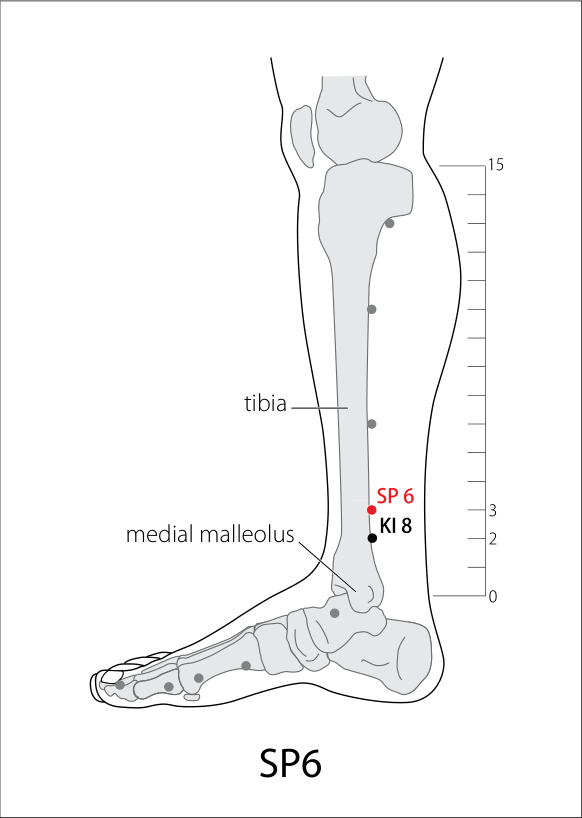
On the inner lower leg, 3 proportional cun above the tip of the inner anklebone, just behind the inner edge of the shinbone.
Covered by the blanket pregnancy rule (classically contraindicated in pregnancy).
More location detail
On the medial leg, 3 cun superior to the tip of the medial malleolus, on the posterior border of the tibia.
Traditional role: The source includes this point in traditional heart-and-kidney and channel descriptions associated with sleep.
See SP6 in the Point Atlas →KI1: Yongquan 湧泉
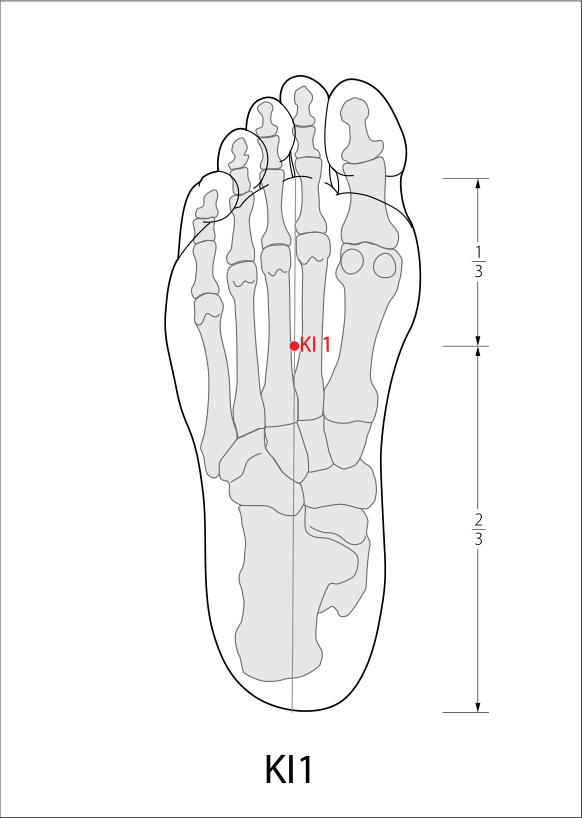
Curl the toes; hollow in the ball of the foot, one-third of the way from toes to heel.
More location detail
On the sole, in the depression when the foot is in plantarflexion, at the junction of the anterior third and posterior two thirds of the sole.
Traditional role: The source uses grounding language for this sole point in traditional sleep-related descriptions.
See KI1 in the Point Atlas →Point locations: WHO Standard Acupuncture Point Locations (SP6, KI1); © WHO.
Common questions
Can moxibustion actually help me sleep, or is this just a warm feeling before bed?
The source associates SP6 and KI1 with traditional calming and grounding language. That association does not establish that moxibustion will improve sleep or suit a particular person.
Is this the same as insomnia from being too hot or restless at night?
The source distinguishes tired-but-wired descriptions from heat-related signs. A short article cannot make that distinction reliably or determine whether heat is appropriate.
Does this article give a schedule or dose?
No. Method, dose, timing and supervision belong to a source-specific assessment and are not supplied here.
Why are these points shown?
They are the points named in the traditional reference for this description. Their locations can be studied in the Atlas; the article does not turn them into a home routine.