Descriptions in the source
- You're cold even when other people are comfortable in the same room.
- Your lower back or belly feels cold to the touch, not just to you.
- You produce a lot of pale urine, and you reach for warm drinks without thinking about it.
Traditional background
A traditional framework, not a biomedical diagnosis.
The tradition reads this as a low inner furnace: the warming, activating side of you (in the clinical register, Yáng) running dim. Not broken. Just running low on fuel, the way a fire burns down to embers overnight if nobody stokes it.
The source discusses warming approaches within this traditional framework. That description is not a diagnosis, proof that warmth is suitable, or a product instruction.
When warmth should wait
Cold language in a source is not enough to establish suitability. The book's cautions include pregnancy-related lower-abdominal and lumbar limits, heat-excess presentations, altered sensation or damaged skin, and temporary states such as exhaustion or intoxication. Use the Guide's checks before considering any practice.
Point references
These traditional topic-to-point associations and home instructions are awaiting qualified review.
Traditional context: The source discusses regular warmth and lower-burner points for this traditional cold pattern; it does not establish a personal home schedule.
DU4: Mingmen 命門
Labelled GV4 in the illustration.
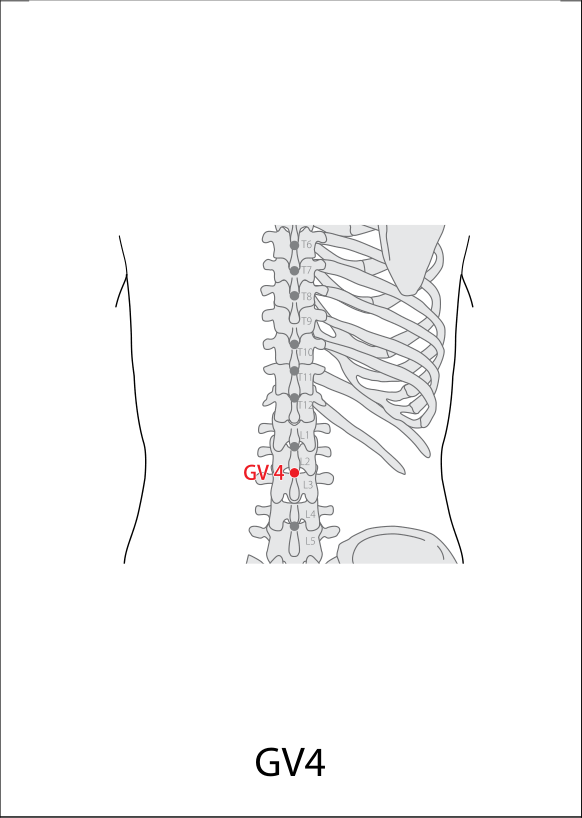
On the lower-back midline, in the hollow below the second lumbar vertebra (L2). Identifying that vertebral level usually needs trained help; the navel is not a reliable shortcut.
Back and neck landmarks can be difficult to identify yourself. An illustration does not establish safe placement.
More location detail
On the posterior median line, in the depression below the spinous process of the second lumbar vertebra (L2).
Traditional role: The source places this Governing Vessel point within its traditional warming framework; the point label does not establish a cause or treatment.
See DU4 in the Point Atlas →REN4: Guanyuan 關元
Labelled CV4 in the illustration.
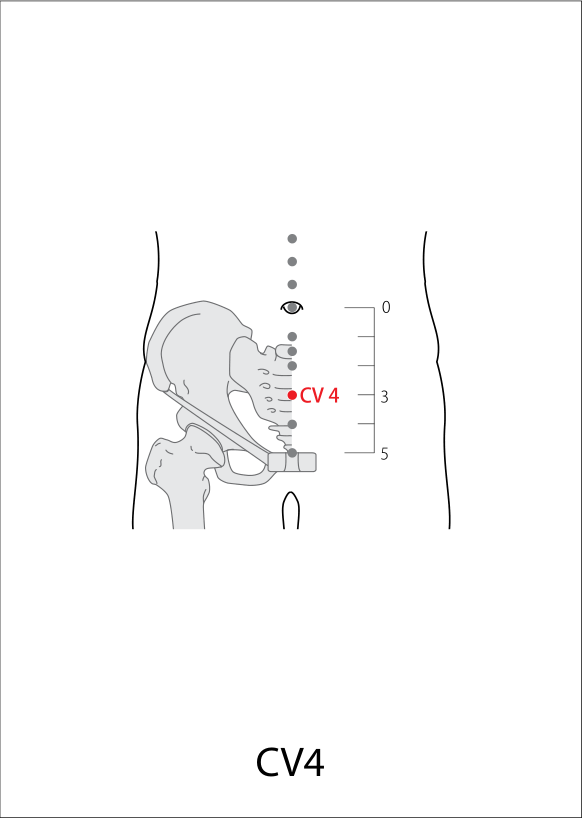
On the midline of the lower abdomen, 3 proportional cun below the centre of the navel. Body-proportion measurement is needed; a palm width is not a universal ruler.
More location detail
On the anterior median line, 3 cun inferior to the umbilicus.
Traditional role: The source discusses this anterior midline point in lower-burner and reserve descriptions; those are traditional roles, not a home recommendation.
See REN4 in the Point Atlas →KI1: Yongquan 湧泉
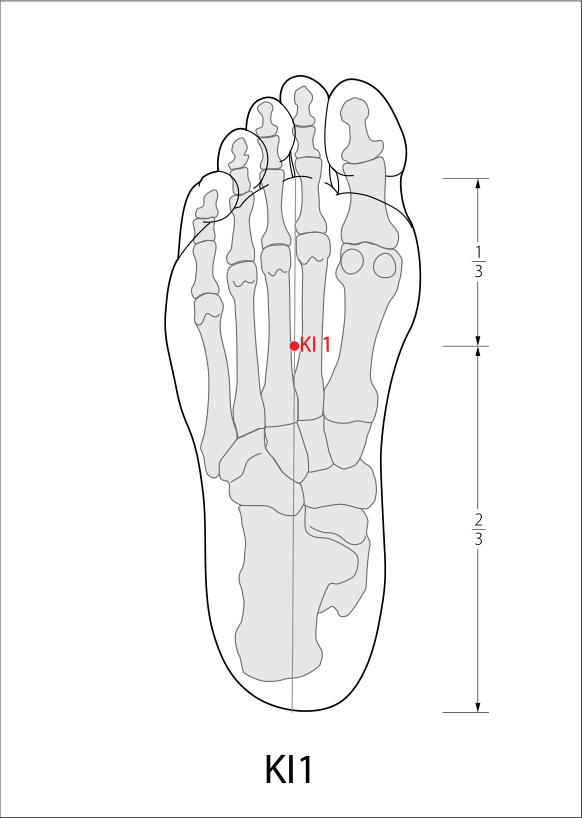
Curl the toes; hollow in the ball of the foot, one-third of the way from toes to heel.
More location detail
On the sole, in the depression when the foot is in plantarflexion, at the junction of the anterior third and posterior two thirds of the sole.
Traditional role: The source associates this sole point with traditional grounding language; its location does not establish that heat is suitable.
See KI1 in the Point Atlas →ST36: Zusanli 足三里
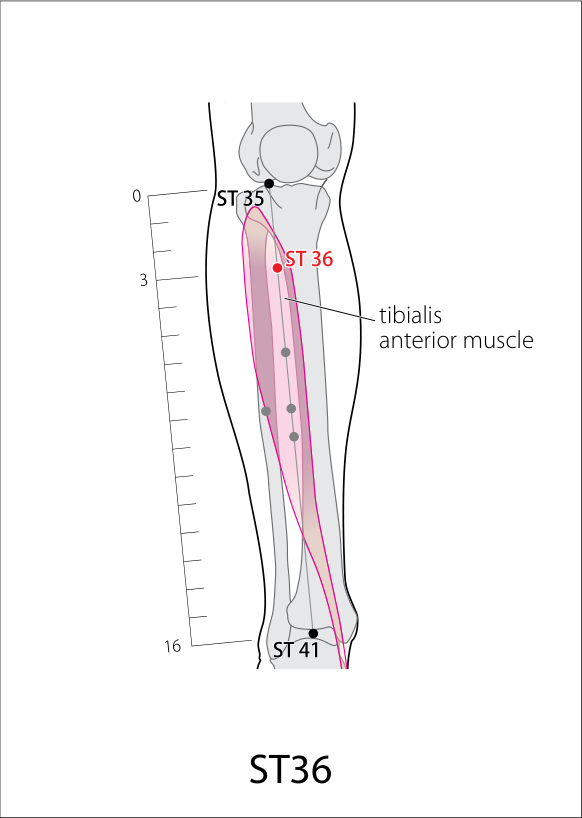
On the front of the lower leg, below the knee and just outside the shinbone. The standard location is 3 proportional cun below ST35, one finger-breadth outside the front edge of the tibia.
More location detail
On the anterior leg, 3 cun inferior to ST35, one finger-breadth lateral to the anterior crest of the tibia.
Traditional role: The source includes this leg point in digestion and health-cultivation discussions; those indications remain traditional descriptions.
See ST36 in the Point Atlas →Point locations: WHO Standard Acupuncture Point Locations (DU4, REN4, KI1, ST36); © WHO.
Common questions
Is moxibustion actually different from just using a heat pack?
A heat pack and moxibustion are different interventions. This article can describe the point map and the source's warming language, but it cannot decide which method, if any, is suitable.
Why are several points mentioned?
Traditional sources distinguish local, distal, channel and pattern-related roles. A list of points is not a combined prescription, and the Guide keeps those questions separate.
Is this safe if I'm pregnant?
Pregnancy changes the safety context, especially for lower-abdominal and lumbar regions. This article cannot clear any home practice; seek qualified advice.
Is being cold all the time ever something more than a 'cold pattern'?
Sometimes. New cold intolerance with unexplained weight gain or hair loss is worth a thyroid check with a doctor first. And if one limb alone turns suddenly cold or looks discoloured, that's urgent: see a doctor immediately, don't reach for moxa.